


Theodorakakos Kydonitsa 2025 (White)

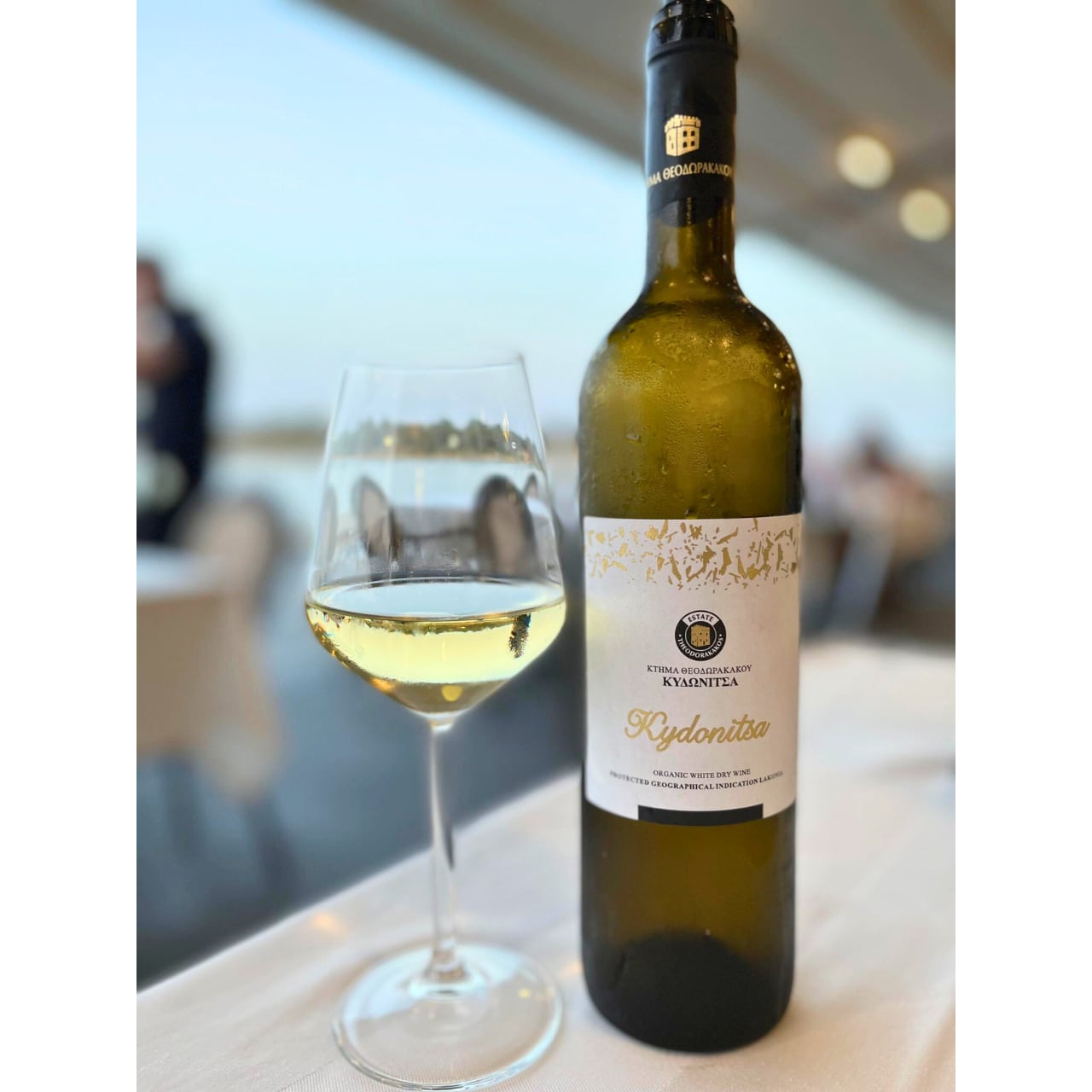


Theodorakakos Kydonitsa 2025 (White)
Using  : to pay next month

*Earliest delivery date is 9/24(Thu) (may require more days depending on delivery address).
*Shipping fee varies by region or size. More information.
*Japan domestic shipping fees for purchases over ¥16,200 will be free.
Tasting Comment
Aromatic and floral, with notes of elderflower and white blossoms layered with fresh fruit aromas of white grapes, pear, lemon, lime and white peach.
Dry on the palate, with bright lemon-like acidity, followed by a subtle salinity,
gentle bitterness and a lingering hint of orange.
A fresh yet expressive white wine that beautifully showcases the character of the
Greek grape variety Kidonitsa.
Acidity: ★★★★☆ Fruitiness: ★★★★★
General Information
Producer: Theodorakakos Estate
Origin: Laconia
Classification: P.G.I. Laconia
Grape Variety: Kidonitsa 100%
Style: Dry
Body: Medium body
Volume: 750 ml
Alcohol: 12.7%
Serving Temperature:10-12°C
Technical Information
Vinification: Hand harvest Cold maceration for 6 hours. Ferment only free run juice (12℃). Mature with lees for 2 months.
Annual Production: 30,000 bottles
Average Yield: 8,000 kg/ha
Altitude: 200m
Vine Age: 10-15 years
Soil: sandy clay-limestone soils
Estate Theodorakakos
In the region of Laconia, located in the southern Peloponnese, one of the pioneers who positioned the area as a source of modern Greek wine was George Theodorakakos. Today, his son Nikos manages one of the two largest organic vineyards in Laconia, covering 40 hectares with an average yield of 8,000 kg/ha. The estate cultivates local varieties such as Kidnitsa,
Mavroudi, Monemvasia, and Agiorgitiko.
Now serving as the head of the winery, Nikos is a devoted family man with four children, known for his deep faith and
calm demeanor. For him, organic viticulture is not only a mission entrusted to him but also a way of contributing to
society. At the same time, he believes that protecting indigenous varieties is equally important. Indeed, it was the
Theodorakakos family who saved two native Laconian grapes—Kidnitsa and Mavroudi—from the brink of extinction.


